
A 3D Font That Reads Like Text, But Can Be Viewed Like Sculpture
A 3D Font That Reads Like Text, But Can Be Viewed Like Sculpture
Woodblock printing and the innovation known as moveable type have their origins in China. Around 600 AD block prints appeared on the scene, perfected on paper toward the end of the Tang dynasty. You could say, then, that the Chinese innovators of the seventh to 10th centuries were some of the world’s earliest typography masters.
Twenty-first century artist and professor Hongtao Zhou knows this. His recent project, “Textscapes,” is as much an homage to their past ingenuity as it is a tribute to the progress made in design since.

Unlike the printers of yore — who used wood from date and pear trees, carving out their characters with knives before inking the block and setting the words to paper, Hongtao uses a 3D printer to craft his art. Despite the obvious differences, he sees a parallel. “Printing technology was first created in ancient China to reproduce text using woodblocks,” he reiterated to HuffPost via email. Three-dimensional printing, he asserts, echoes these older methods, with its additive process used “more often to create objects instead of duplicate text.”
Hongtao’s font brings text to life, turning subject matter concerning landscapes, cities or figures into visual aberrations that actually appear like architectural pieces. A letter becomes a city, a story becomes abstract sculptures. Printing during Imperial times resulted in a beautifully carved block, while Hongtao’s 3D printing results in “Textscapes.”

“These documents make reading interactive for a general audience… [it’s] knowledge as well as art,” he added. “This series of work has text variations of braille, language characters, calligraphies and number systems to bridge the text and its visuality in architecture, landscape, portraits and abstract matters.”
Check out a preview of the series here and head over to Hongtao’s website for more information.
Other participating artists and designers involved with “Textscapes” are Tyler Francisco, Rhealyn Dalere and Chin Fang Chen from the School of Architecture at the University of Hawaii-Manoa.


WHS Alum Jenna Moran- Down to the Very Marrow: Alumni Save Lives with Transplants
June 11, 2015 by · Leave a Comment
From Boston to Bangladesh — by the bedside, in the operating room, and in the halls of the Legislature — Anselmians help people of all ages and walks of life who need a bone marrow or stem cell transplant in order to fight a life-threatening type of cancer. They work on many fronts to see that better treatments are developed and that patients receive the procedures that can extend, and hopefully save, their lives. Non-scientific students and alumni do their part by registering as potential donors, and many have successfully completed the procedure. Nursing grads like Jenna Moran ’08 work on patient units. Dr. Kellie Sprague ’86 directs a transplant unit at Tufts Medical Center. Other alumni work on the advocacy front, raising awareness of just how easy it is to become a donor and save a life.

From Boston to Bangladesh
The public hospital in Bangladesh is unlike any hospital Jenna Moran has ever worked in. Massachusetts General Hospital (MGH) is big, but not this big. Dhaka Medical College Hospital has 2,200 beds and an occupancy rate of 130 percent. Patients fill the hallways. Every day, 1,500 people crowd its outdoor clinic.
 But on March 6, Moran was thrilled to walk through its gates for the sixth time in 20 months. She was part of a team conducting autologous stem cell transplants in Bangladesh’s first bone marrow transplant unit. She looked forward to seeing Meena, Shabnam and the other nurses there—nurses she trained to provide life-saving care and hope to people like Yeasmin Ali, a mother of two suffering from acute leukemia. Along with other specialists from MGH, Moran has helped launch what one health minister called “a new era of medical care in Bangladesh.”
“I was able to participate in the first autologous bone marrow transplant in the country, which was a really amazing experience,” says the Anselmian nursing grad, an oncology nurse practitioner specializing in leukemia and bone marrow transplants at MGH. Ever since graduating from Saint Anselm, Moran has cared for children and adults with blood cancer. She started as a staff nurse on a hematology/oncology/bone marrow transplant floor at Brigham & Women’s Hospital, staying for four years as she studied in Simmons College’s nurse practitioner program. In 2012, she began working at MGH. There, she met attending physician Bimalangshu Dey, who was making his dream of opening a bone marrow transplant unit in his native country a reality.
“I told him of my interest in global oncology and started doing work for this project in spring 2013,” recalls Moran. “By this time he was developing a comprehensive bone marrow transplant unit there.”
Nurses in Bangladesh have a very low-level education and their practice equates to that of a nursing assistant in our country, Moran says. Her role was to help improve their skill set and learn the specialty of hematology oncology/bone marrow transplantation. She developed a one-year curriculum that included English training, nursing fundamentals, oncology/bone marrow knowledge, and clinical practice. She developed lectures, wrote case studies and exams, and ran skills labs to teach IV chemotherapy administration, charting, dressing care, and stem cell infusion.
After training them for a year and a half and keeping in contact through email and Facetime, she considered the 20 nurses colleagues and friends and shared their pride. When the nation’s first bone marrow transplant was successfully completed, the nurse from Massachusetts celebrated along with the Bangladeshi nurses she had mentored.
“On each trip, I was able to see the progress they were making in their practice and the changes in their level of confidence as active members of the medical team,” she says. The cancer center at MGH is world-renowned for its expertise in bone marrow transplantation to treat blood malignancies and disorders such as Hodgkins and non-Hodgkins lymphoma, aplastic anemia, and acute leukemia. About 300 people a year receive bone marrow and stem cell transplants there. MGH doctors provided much of the impetus and expertise for the unit in Bangladesh. The modern bone marrow transplant unit at Dhaka Medical Center is modeled on MGH’s unit on Lunder 10.

Collaborative Jelly Fish Trash Sculpture Opening at the Griffin Museum of Photography
According to the Blue Ocean Society for Marine Conservation, more than a million birds and 100,000 marine mammals and sea turtles die every year from eating or getting entangled in plastic. Often times sea animals see floating plastic bags and confuse them for food (like jelly fish) In addition Jellyfish blooms are spiking at an alarming rate, and scientist believe that human induced stresses like overfishing, habitat modification, eutrophication, and climate change are contributors.
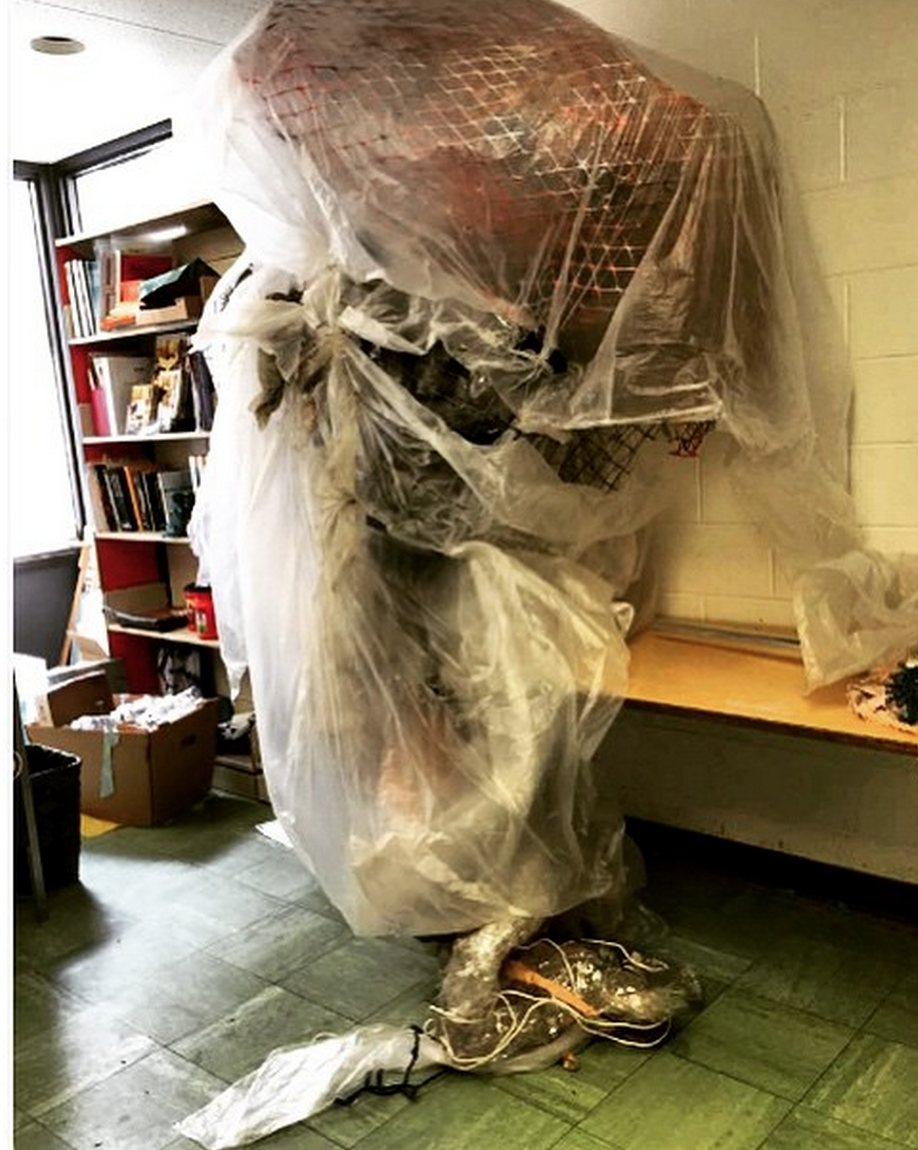
Library/Media Specialist, Andrea Zampitella, Connect and Commit’s Lauren D. Winterer, local artist Amy Eastwood Brown, and WHS art students are working to produce a large-scale jellyfish sculpture made from collected trash found around the area that will be displayed in conjunction with photography by Jerry Takigawa, Robert Rindler, David Welch and Jeremy Underwood at the Griffin Museum of Photography
Please join us for the opening next Wednesday, May 27th from 7:00- 9:00 PM. We will have food and refreshments as well as live music by the wonderful,Post Modern Authors as we celebrate the hard work of WHS art students.
All proceeds go to the Ocean Conservancy Organization

Environmental Art Project in the Library this week!
Environmental Art Project
According to the Blue Ocean Society for Marine Conservation,more than a million birds and 100,000 marine mammals and sea turtles die every year from eating or getting entangled in plastic. Often times sea animals see floating plastic bags and confuse them for food (like jelly fish) In addition Jellyfish blooms are spiking at an alarming rate, and scientist believe that human induced stresses like overfishing, habitat modification, eutrophication, and climate change are contributors.
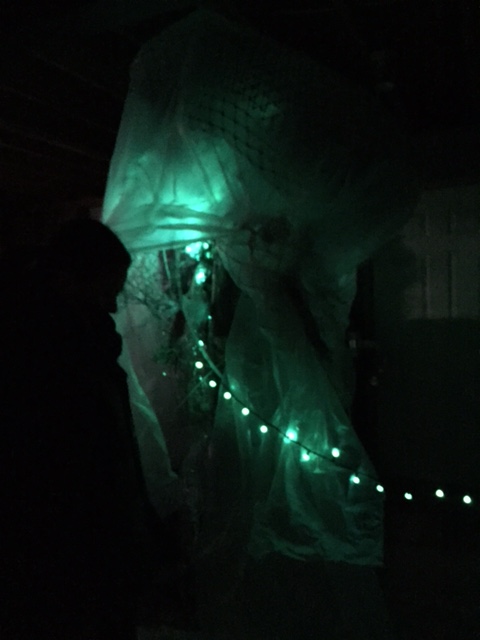
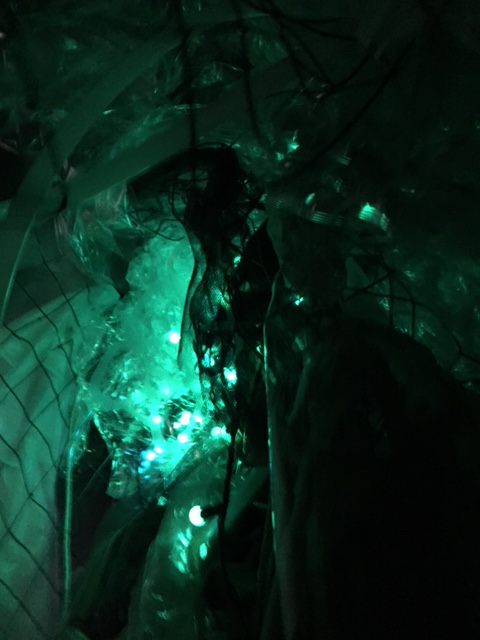
Library/Media Specialist, Andrea Zampitella, Connect and Commit’s Lauren Winterer, and WHS students are working alongside the Griffin Museum of Photography to produce a large-scale jellyfish sculpture made from recycled materials that will be displayed in conjunction with artist’s Jerry Takigawa, Robert Rindler, David Welch and Jeremy Underwood work at the Griffin Museum of Photography.
The show runs from April 9 – June 5, 2015. Interested students should contact Ms. Z at azampitella@winchesterps.org
Help contribute to our communal sculpture by:
Picking up trash (gloves available in library)
Adding trash (specifically plastic) to our jelly fish sculpture
In progress photos:
Sweden Runs out of Garbage!
Sweden Runs Out Of Garbage: Only 1% Ends Up In Landfills

advertisement – learn more
Something incredible has been taking place in Sweden over the past several years, somewhat of a “recycling revolution,” if you will. Currently less than one percent of the garbage produced in Swedish homes ends up in the landfill today, with the other ninety-nine percent being recycled or composted.
Sweden has been known for years now for the amazing and resourceful waste management system that they have had in place for some time. They have 32 waste-to-energy (WTE) plants and this burned waste powers 20 percent of Sweden’s district heating as well as electricity for about 250,000 Swedish homes.
In fact, Sweden has become so good at recycling their waste; the country now has to import800,000 tons of trash each year from the U.K., Italy, Ireland and Norway to keep their WTE plants up and running.
According to Swedish Waste Management communications director Anna-Carin Gripwell, “Waste today is a commodity in a different way than it has been. It’s not only waste, it’s a business.”
This is pretty impressive especially when compared to Americans who recycled just thirty-four percent of their waste in 2010 and according to the Environmental Protection Agency more than fifty percent of the average U.S. household waste ended up in landfills, this is about 136 million tons of garbage in total. According to the New York Times there are some trash burning facilities in the United States, but only a small portion of the waste is burned, and most of that burned waste ends up in landfills anyways.
What About The Environmental Effects?
Of course there is some controversy over this method of waste management and energy production. There are fumes that are produced that are toxic, but many argue that this is still a much better alternative to the typical landfills that we see more often in America. On average, more than forty percent of the world’s trash is burned and mostly in open air, this is much different from the regulated, low-emission process that has been adopted by Sweden. This makes Sweden’s method a lot more eco-friendly.
It is unfortunate that at this time the options are to either pollute the air, or pollute the Earth because we are producing so much garbage and it doesn’t just simply disappear without leaving its mark. It doesn’t look like manufacturers are going to stop making products that can’t be recycled anytime soon, so it is up to us to be more conscious with what we are consuming. We need to stop the problem at the source.
How Can We All Be A Bit More Like The Swedish?
Sweden is an excellent example of a nation of citizens that care for their environment and their ecological footprint. If the Swedish are able to recycle 99% of their waste, why can’t we? Well we certainly can, however it does take a bit more effort. I believe that it is truly worth the effort, soon it will become so natural to us that it won’t even feel effortful, we just have to start taking that step!
There are many people now that are striving to produce zero or at least very minimal waste. You can read one of those stories here, check out the supermarket in Germany that produces zero waste here and read about the American restaurant that managed to not produce any waste in two years and counting here to get inspired on how you to can begin to implement a minimal waste, minimal footprint lifestyle.

I am Malala Book Discussion Group

If you are interested in social justice, current events and the right to education, or if you just love to read then this is the group for you.
First Meeting: Thursday March 5th
2:30 p.m. in the Library
 WHS Learning Commons