Brian Knep Nov 9th
 The WHS Learning Commons and CTC Leadership Team is proud to announce a Creative Technology Lecture Series sponsored by WFEE. Our goal is to bring in guest lecturers whose work bridges the arts, sciences, mathematics, and humanities in order to generate interest in a creative space that crosses the boundaries of departments and allows for the fluidity to explore topics at the intersection of different subjects.
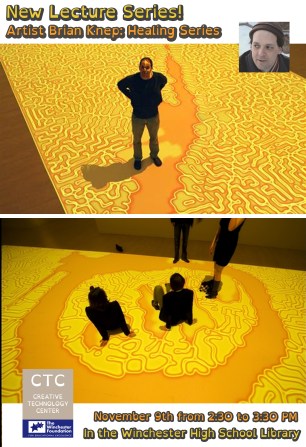
Our first lecture will be held Wednesday, November 9 in the WHS Library from 2:30 – 3:30 PM. We will feature artist Brian Knep whose work explores artificial intelligence, biology, engineering, and art.
Brian’s ‘Healing Series’ “are interactive floor projections with patterns that change in response to visitors. When visitors walk across, the patterns pull away, creating wounds. When left alone, the patterns grow to cover these wounds. In each of the pieces, however the patterns grow back in different ways.” (From Brian’s website)
Our students John Clewley and Ana Watson have designed posters for the event
 We hope to cast a wide net and bring as many community members to the lecture as possible. Please join us and feel free to use the event as a curriculum opportunity!
Thank you,
the Creative Technology Team
October Learning Commons Newsletter
Click on the Newsletter to open. If you click on the text it should link you to relevant webpages!

A Chemist and a Designer Team Up To Weave Solar Panels Into Fabric
Trisha Andrew and Marianne Fairbanks are developing a solar textile that could end up in clothing, curtains, car seats and tents

SMITHSONIAN.COM
For years, fabric designer Marianne Fairbanks made solar-charged handbags. Her company, Noon Solar, was geared toward the high-end, urban-based fashion market and, at its peak, was selling in 30 stores in the United States and Canada. While Noon Solar closed its doors in 2010, Fairbanks, who joined the University of Wisconsin-Madison in 2014 as an assistant professor in the school of human ecology, was still intrigued with the concept of solar design.
Once she arrived on campus, Fairbanks discovered Trisha Andrew, an assistant professor of organic chemistry now at the University of Massachusetts-Amherst. Andrew’s specialty is in developing low-cost, lightweight solar cells. Specifically, she had created an organic dye-based solar cell on paper.
The collaboration between the two began with an innocent phone call.
“I asked Trish,” says Fairbanks, “if we could apply her idea that she’d used on paper onto a textile. And that’s how our project started.”
“The way that today’s wearable electronics are created is a simple process of packaging,” says Andrew. “A Fitbit or an Apple watch—they all have a PCB [printed circuit board], which holds the little electronic circuit. It allows you to ‘wear’ that device, but to me that’s not real wearable electronics. That’s only something that is patched onto another material.”
Their shared passion for solar innovation now has them working towards finalizing the design of a solar textile. While Fairbanks’s plans are to ultimately cultivate a finished fabric, Andrew hopes to take that fabric and actually manufacture marketable products. Andrew envisions fabric panels for heated car seats or even small solar panels sewn into a larger garment.

Historically, solar panels have been made out of glass or plastic—materials that are hard and can be destroyed fairly easily. Researchers first turned to textiles in 2001 in an effort to create a solar component that is pliable, breathable and flexible. Since then, solar fabrics have been incorporated into stadium covers, carports and even wearable art, but Andrew and Fairbanks claim that their fabric is superior to other groups’ in breathability, strength and density. Not only have they figured out how to utilize their process on any type of fabric, but because this is a collaboration between scientist and designer, they also have the ability to broaden the scope of solar textiles within a more commercial, consumer-friendly market.
“The biggest problem is that textiles, from an engineering and chemistry concern, are that they’re incredibly rough,” says Andrew. “They’re a three dimensional substrate; they’re not flat.”
Their solar cell consists of one layer of fabric that has four coats of different polymers. The first coat is Poly(3,4-ethylenedioxythiophene), or “PEDOT”, which Andrew and her post-doc research assistant, Lushuai Zhang, discovered worked incredibly well to increase a fabric’s conductivity. The other three coats are various semiconducting dyes, such as blue dye copper phthalocyanine, that act as the photoactive layers or light absorbers for the cell. Andrew and Fairbanks have achieved repeated success with the first two coats but are still working out the kinks for coats three and four.
Fabrics, as opposed to smooth and shiny glass or plastic, are porous, which makes evenly coating them with specific polymers a bit tricky. If you consider how a piece of fabric is created, it’s made up of multiple fibers twisted together. Each fiber will have a different level of roughness, which, from a chemistry standpoint, includes multiple light scales (nanometer, micrometer, etc.).
“In order to actually put the electronically conductive polymer over that surface, you have to traverse all of these different light scales,” says Andrew. “And that’s hard.”
To get around this issue, Andrew decided to try Chemical Vapor Deposition (CVD), a technique typically reserved for inorganic experiments that use hard substrates like metals or plastics. By taking advantage of the mass transport properties, or the general physical laws governing the movement of mass from one point to another, Andrew can uniformly coat any arbitrary substance, including fabric, because the nanomaterials used don’t care about the surface of the substrate. Even better, she applies the PEDOT within a vacuum.
The next step was determining which fabrics would work best.
“I brought over silk, wool, nylon—all of these different substrates,” says Fairbanks, noting that the materials were standard samples from Jo-Ann Fabrics. To test the fabrics, they coated each one with PEDOT and other semiconductor materials, then hooked them up to electrode clips and wires. They applied voltage and measured the output current for each swatch.
“Some of them would warm up and take the energy and translate it into heat; some of them dispensed the heat, yet conducted much more easily,” says Fairbanks.
“The conductivity of the PEDOT was completely determined by the underlying textiles,” adds Andrew. “If we had a porous textile, we got conductivity higher than the copper. If we had a very fuzzy textile, like fuzzy cotton jersey or wool felt, or very tightly woven textiles, then the conductivity of the PEDOT was really bad.”
Based upon their initial experiments, Andrew proposed a glove prototype to take advantage of the various properties of each fabric. Essentially, their design used specific textiles to conduct electricity to warm different parts of the glove. The prototype is made out of pineapple fiber, which is very conductive and absorbs the heat, and cotton, which acts as a brake to keep the heat contained between the layers. This is the first item the duo has created that they hope to actually market.
“What’s really fascinating about this collaboration,” says Fairbanks, “is that we didn’t come together to create this glove, specifically. It was just one of these other side outputs of the original research.”
Through the process of research and development, Andrew and Fairbanks have experimented beyond their initial solar textile idea, which is still a work in progress, to another solar innovation that involves coating each individual fiber with PEDOT and weaving the pieces together to form the working circuit. This completely original fabric works like a triboelectric device, translating mechanical motion into power. The duo has constructed 10-by-10-inch swatches of different weave patterns, with the most efficient generating about 400 milliwatts of power, by simply waving it around like a little flag.
“If you actually made a standard curtain for a house, something 4-by-4-feet, then that is more than enough power to charge your smartphone,” says Andrew, noting that the material would only need a breeze coming through the window to generate that level of power.
Andrew and Fairbanks are working with several companies within a variety of industries that are interested in incorporating these ideas into future products. Andrew, for example, has an Air Force grant aimed at producing solar tents for soldier use and has outdoor gear in development with Patagonia.
“I get really excited, because textiles are portable and lightweight,” says Fairbanks. “They could be deployed in the wilderness for a hunter or in the field for medical or military applications in a way that big clunky solar panels never could be.”
Fairbanks sees boundless potential. The solar textile, she says, could be used for hundreds of future applications, including umbrellas, awnings and refugee shelters, while the triboelectric fabric could be used in housewares or athletic gear, such as running shirts and tennis shoes—anything that requires motion since that’s how it generates power.
“I’m excited to get it 100 percent functioning and out into the world,” says Fairbanks.
CTC Buster’s Visit
 The CTC Leadership team had our last meeting on Wednesday. We had a visit from Buster – a therapy dog. Winnie Li and Dan Barskiy designed a logo for the cycling team “Buster’s Badass Bikers” for the the MS Ride in August. We can’t wait to see their designs on the team jerseys!


Authorfest


On Tuesday April 12th, WHS held our annual Authorfest in the new auditorium with two great authors, teen fiction writer Kim Savage and non-fiction historian,Stephen Puleo. Winchester’s own author Kim Savage spoke about her debut novel, After the Woods, and gave insight into what it takes to be an author of teen fiction. Kim explained that she had an “ulterior motive”- to encourage students to write their stories and even offered to have students send her their ideas so she could provide feedback. Kim introduced the process of writing a book, from finding a literary agent, to the many rounds of editing, to how to crowd source using social media platforms like Wattpad, an online community for readers and writers. Stephen Puleo spoke about his novel, The Caning, the often overlooked story of the 1856 assault of Massachusetts senator Charles Sumner on the floor of the US senate by South Carolina Congressman Preston Brooks. Stephen has a background as an award-winning newspaper reporter, has taught history at Suffolk University in Boston and holds a master’s degree in history from UMass-Boston. The Caning, highlights how politically divided we were as a nation back in the 1850’s and carries many parallels to today’s political climate. Stephen spoke about his immense research and about finding compelling narratives and personal stories to inspire a love for history. It was a great day and students asked so many great questions.

Steve Puleo and Kim Savage at WHS Authorfest
Steve Puleo will speak to WHS about his most recent novel : The Caning: The Assault That Drove America To Civil War.

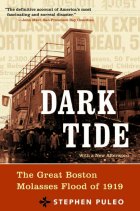


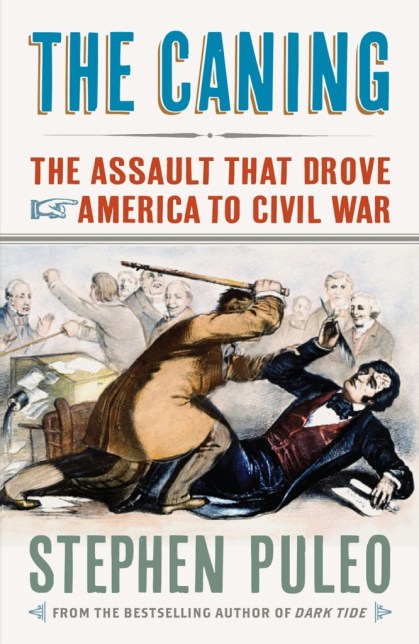
Stephen Puleo is an author, historian, teacher, public speaker, and communications professional. His five narrative nonfiction works include:
- The Caning: The Assault That Drove America to Civil War (2012)
- A City So Grand: The Rise of an American Metropolis, Boston 1850-1900 (2010)
- The Boston Italians: A Story of Pride, Perseverance and Paesani, from the Years of the Great Immigration to the Present Day (2007)
- Due to Enemy Action: The True World War II Story of the USS Eagle 56 (2005)
- Dark Tide: The Great Boston Molasses Flood of 1919 (2003)
His sixth book, American Treasures: The Secret Efforts to Save the Declaration of Independence, the Constitution, and the Gettysburg Address, is slated for publication in 2016 (St. Martin’s Press). All of his books have been Boston regional bestsellers. In addition, Steve’s books have been reviewed favorably by the New Yorker, the Boston Globe, The National Review, Forbes.com, C-SPAN, the Associated Press, the Portland Press Herald, the Providence Journal, the Denver Post, the San Francisco Bay Guardian, the Hartford Courant, Kirkus Reviews, Barnes and Noble Review.com, the Fredericksburg Star, ForeWord magazine, and Publishers Weekly (a few excerpts follow this bio summary).
An experienced, dynamic, and in-demand speaker and presenter, he has made more than 450 public appearances, before thousands of readers, since the publication of his first book, Dark Tide, in 2003. Events have included bookstore signings, keynote addresses, presentations at libraries, historical societies, community events, seminars, panel discussions, industry events, professional associations, book clubs (more than 50 have chosen his books), newspaper and magazine interviews, radio and television appearances, and appearances at universities, and public and private K-12 schools. His books have been woven into the curricula of numerous high schools and colleges. More than 20 communities have selected his books as “community-wide reads.” Steve also conducts book-club tours of Boston’s North End, one of the nation’s most colorful and historic neighborhoods.
His showcase appearances include serving as keynote speaker at the Northeast Regional Association of the Social Studies (more than 600 history teachers); as a guest speaker for the 150th Anniversary Celebration of the Massachusetts Superior Court; and as a panel participant with Italian-American and Jewish-American scholars entitled Italy and the Holocaust: The Calabria Connection, presented at UMass-Boston.
A former award-winning newspaper reporter and contributor of feature stories and book reviews to publications that include American History magazine and the Boston Globe, Puleo has taught history at Suffolk University in Boston, and also has developed and taught numerous writing workshops for high school and college students, as well as for adults who aspire to be writers. He holds a master’s degree in history from UMass-Boston (1994), where he received the Dean’s Award for Academic Achievement and was the Graduate Convocation keynote speaker. His master’s thesis is entitled From Italy to Boston’s North End: Italian Immigration and Settlement, 1890-1910). He holds a bachelor’s degree in English from UMass-Boston.
In addition to his strong writing background, Steve has more than 30 years of experience in public relations, corporate communications, speechwriting, speech coaching, and marketing. He has won numerous corporate communications awards and has been both a keynote speaker and panelist at communications conferences.
Steve is the past recipient of the prestigious i migliori award, presented by the Pirandello Lyceum to Italian-Americans who have excelled in their fields of endeavor and made important contributions to society. Steve and his wife, Kate, who live south of Boston, donate a portion of his book proceeds to the Juvenile Diabetes Research Foundation (JDRF). Email Steve at spuleo@aol.com or steve@stephenpuleo.com. Visit his website at www.stephenpuleo.com, his Facebook page at www.facebook.com/stephenpuleoauthor, or follow him on Twitter at twitter.com/spuleoauthor.


I was born and raised in Massachusetts, on the South Shore, which sounds beachy, even luxe. Think Winnebagos and chicken coops. My three brothers, 16, 10, and 8 years older, were teens by the time I became a person. Happiest around adults, who often forgot I was there, I spent days eavesdropping on gossipy moms in lawn chairs and nights listening under the table during tipsy Scrabble parties.
My dad read to me nightly. Eventually and early, I read to myself, everywhere. On top of an enormous freezer chest stuffed with meat. On drives until I grew nauseous. In bed until my eyes gave out. I read anything I could get my hands on. V.C. Andrews and Dickens. Black Beauty and the Bible. The Economist. Madeline L’Engle and Margaret Atwood. National Geographic.
I got a bachelor’s degree in English from Stonehill College and a Master’s in Journalism from Northeastern University. For a while, I worked as a business journalist. Instead of waiting for the Federal Reserve to release the Beige Book, I pitched story ideas along the lines of “Stigmatized Properties: When Murder Kills Property Values”. You see where things were headed.
Today, I live with my family northwest of Boston in a town a lot like Shiverton, near the real Fells reservation of AFTER THE WOODS. Born with dysgeographica—I’m directionally challenged—the fear of getting lost in that lovely, dark forest lives close to my skin.
After the Woods:
“Statistically speaking, girls like me don’t come back when guys like Donald Jessup take us.”
Julia knows she beat the odds. She escaped the kidnapper who hunted her in the woods for two terrifying nights that she can’t fully remember. Now it’s one year later, and a dead girl turns up in those same woods. The terrible memories resurface, leaving Julia in a stupor at awkward moments: in front of gorgeous Kellan MacDougall, for example.
At least Julia’s not alone. Her best friend, Liv, was in the woods, too. When Julia got caught, Liv ran away. Is Liv’s guilt over leaving Julia the reason she’s starving herself? Is hooking up with Shane Cuthbert, an addict with an explosive temper, Liv’s way of punishing herself for not having Julia’s back? As the devastating truth about Liv becomes clear, Julia realizes the one person she thinks she knows best—Liv—is the person she knows least of all. And that after the woods was just the beginning.
This Ludicrous New Instrument Makes Music with 2,000 Marbles
by Christopher Jobson on March 2, 2016
Swedish musician Martin Molin has long had experience with esoteric instruments like the glockenspiel, traktofon, or Theremin, but he may have topped his musical prowess with the invention of his own new instrument: the Wintergartan Marble Machine, a hand-cranked music box loaded with instruments including a circuit of 2,000 cascading steel marbles. As the devices cycles it activates a vibraphone, bass, kick drum, cymbal and other instruments that play a score programmed into a 32 bar loop comprised of LEGO technic parts. The marbles are moved internally through the machine using funnels, pulleys, and tubes.
Molin began work on the marble machine in August 2014 and hoped to spend about two months on the project. Its complexity soon spiraled out of control as all 3,000 internal parts had to be designed and fabricated by hand, a time-consuming process that eventually took 14 months. An early version was designed using 3D software, but it was easier for Molin to create parts on the fly leading to it’s Frankenstein appearance. The musician shared much of his progress in regular video updates that he shared on YouTube.
Despite the extreme interest an oddity like the Wintergartan Marble Machine is bound to generate—especially on the internet—don’t expect to see it on tour anytime soon, as the contraption has to be completely disassembled to move it. Molin hopes to build additional music devices, some smaller, or perhaps more suited for transport. You can read a bit more about it on Wired UK.
 WHS Learning Commons